

Outer sleeves were something I added later than I probably should have, mostly because jacket damage feels cosmetic until it is suddenly not. Early on, I focused almost entirely on the records themselves. I cleaned them, stored them upright, and handled them carefully. The jackets, on the other hand, were treated as passive containers that would age on their own without much intervention.
Over time, the wear patterns became obvious. Shelf rub along the edges. Ring wear that slowly appeared even on albums that were rarely played. Corners that softened and creased simply from being slid in and out of tightly packed shelves. None of this came from abuse. It came from normal storage and normal handling over years.
What finally changed my approach was pulling out box sets and gatefold records that had been stored carefully but still showed visible wear. Heavier jackets, thicker spines, and layered folds seem to attract damage faster, not slower. Once that wear sets in, it is permanent. You can stabilize it, but you cannot undo it.
Outer sleeves did not make my collection look pristine overnight. What they did was slow the aging process in a way that felt proportional and realistic. Jackets stayed cleaner. Edges stopped rubbing against neighboring records. Handling felt less stressful, especially when pulling records from tight shelves.
This guide is written for collectors who care about jackets as part of the record, not just the sound inside. Outer sleeves are not about display perfection. They are about reducing the small, repeatable stresses that quietly degrade jackets over time. Choosing the right ones is less about thickness alone and more about fit, flexibility, and how your records are actually stored day to day.
Quick Recommendations
If you want a clear starting point without digging into materials and measurements, these outer sleeves cover the most common storage needs. Each option below focuses on a different balance of protection, fit, and day-to-day usability for long-term jacket care.
Best Overall Jacket Protection | Hudson Hi-Fi Vinyl Record Outer Sleeve Covers
A dependable all-around choice that balances thickness, clarity, and flexibility. These work well for standard jackets and help reduce edge wear and shelf rub without feeling bulky.
Best for Tight Shelving | Vinyl Storage Solutions 12.75″ Single Pocket Outer Sleeves
Slightly oversized without being floppy, these sleeves are easier to work with in dense shelving and reduce friction when sliding records in and out.
Best Value Bulk Option | Invest In Vinyl 100 Clear Plastic Protective LP Outer Sleeves
A practical choice for upgrading large collections. These offer solid jacket protection at scale without drifting into premium pricing.
Best Budget Upgrade from No Sleeves | Big Fudge Vinyl Record Outer Sleeves
An accessible step up from bare jackets. These help reduce dust and shelf wear while keeping costs manageable for expanding collections.
Best Premium Feel and Clarity | Boundless Audio Vinyl Record Outer Sleeves
Designed for collectors who care about visual clarity and long-term durability. These feel smoother and more substantial during handling.
Buyer Education: Choosing Outer Sleeves for Jacket Protection
Outer sleeves protect record jackets from a different set of risks than inner sleeves protect records. Jackets are most often damaged by friction, pressure, and environmental exposure rather than direct handling mistakes. Understanding what outer sleeves actually prevent, and what they do not, helps avoid false expectations and poor fit choices.
What Outer Sleeves Actually Protect Against
Outer sleeves are most effective at reducing shelf wear, edge rub, and surface scuffing. When jackets sit directly against one another, especially in tight shelving, friction slowly breaks down corners and edges. Outer sleeves create a low-friction barrier that absorbs that contact instead of the jacket itself. This is why many collectors eventually ask Do Outer Sleeves Actually Protect Record Jackets? once they start noticing repeating wear patterns.
Outer sleeves also limit dust and surface grime. While jackets are not as sensitive as records, dirt embedded into textured covers or laminated finishes is difficult to remove without causing further wear. A sleeve keeps jackets cleaner during long periods of storage.
Thickness and Flexibility Tradeoffs
Thicker sleeves often feel more protective, but thickness alone does not determine performance. Very rigid sleeves can bunch, crease, or resist sliding in tight shelves, which increases handling stress instead of reducing it. Slightly flexible sleeves tend to work better in real-world storage because they adapt to pressure without fighting it.
The goal is a sleeve that is thick enough to resist tearing but flexible enough to move with the jacket. This balance matters more than chasing the heaviest material available.
Fit Matters More Than You Expect
Sleeves that are too tight make insertion frustrating and increase corner wear during reinsertion. Sleeves that are too loose allow jackets to shift inside, which can lead to edge curling or uneven pressure. Standard jackets, gatefolds, and box sets all have different needs, which is why fit should guide your choice.
Storage habits also play a role. Shelving depth, shelf pressure, and how often records are pulled all influence whether a tighter or looser sleeve works better. How to Store Vinyl Records Without Damaging the Jacket provides a deeper look at how storage conditions interact with sleeve choice.
Special Considerations for Gatefolds and Box Sets
Gatefold records and box sets experience more stress because of their size and weight. Outer sleeves that work well for single LPs may feel restrictive on thicker releases. Oversized or single-pocket sleeves often perform better here by reducing compression and allowing the jacket to sit naturally.
If your collection includes many multi-disc sets or heavy jackets, How to Store Box Sets and Gatefold Records Safely explains why sleeve selection becomes even more important as weight and thickness increase.
Choosing the right outer sleeve is about minimizing friction and pressure over time. When sleeves fit well and move easily within your storage system, they protect jackets quietly and consistently without adding handling friction or visual clutter.
Product Reviews: Outer Sleeves
Best Overall Jacket Protection
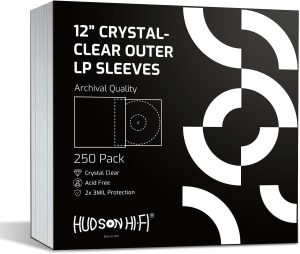
Hudson Hi-Fi’s outer sleeves are a strong default choice for collectors who want reliable jacket protection without having to think too hard about sizing or material tradeoffs. These sleeves balance thickness, flexibility, and clarity in a way that works well for most standard LP jackets and everyday storage setups.
In regular use, the material feels substantial without being stiff. That balance matters more than it sounds. Sleeves that are too thin can wrinkle or tear over time, while overly rigid sleeves tend to fight against tight shelving and make handling more awkward. Hudson Hi-Fi’s sleeves sit comfortably in the middle, absorbing shelf pressure and reducing edge wear without creating resistance when sliding records in and out.
Clarity is another strength. The plastic stays reasonably clear over time, which helps preserve the visual appeal of album art without introducing haze or cloudiness. This is especially noticeable on darker covers or glossy finishes, where lower-quality sleeves can dull the artwork. For collectors who browse their shelves visually as much as they listen, that clarity adds everyday value.
Fit is consistent across standard jackets. These sleeves allow enough room for the jacket to sit naturally without excessive shifting inside. Corners are less likely to catch during reinsertion, which reduces the slow creasing that often appears along jacket edges after years of use. While they are not oversized enough for thicker box sets, they handle single LPs and most gatefolds comfortably.
These sleeves are best for collectors who want a dependable, all-purpose solution for protecting jackets from shelf rub, dust, and handling wear. They are not specialized for oversized releases, but as a baseline sleeve for the majority of a collection, they perform quietly and consistently. For many collections, they represent a sensible standard rather than an upgrade reserved for special records.
Best for Tight Shelving

These outer sleeves are a solid choice for collectors who deal with densely packed shelves and want protection that moves with their records instead of against them. Slightly larger than standard outer sleeves, they give just enough extra room to reduce friction between jacket and sleeve without allowing the jacket to flop around inside.
One of the first benefits you’ll notice is how smoothly sleeves slide in and out when shelves are tight. Too often, snug shelves cause rigid sleeves to bunch or resist movement, which leads to awkward handling and can even accelerate edge wear. These sleeves’ flexibility helps avoid that problem, making everyday use more comfortable while still guarding against shelf rub and corner scuffing.
The material strikes a good balance between durability and suppleness. It is thick enough to protect against repeated contact with neighboring jackets but not so stiff that it fights back when inserted into a packed row of records. That flexibility also makes them easier to work with on heavy gatefolds or jackets with slight warping from time or humidity changes.
Clarity remains good enough to enjoy cover art without distraction, and they hold their shape during normal use. They may not be the highest-clarity option available, but for many collectors the visual quality is more than adequate for shelf presentation.
These sleeves are best for collections where space is at a premium and routine handling can cause unnecessary stress on jacket corners. If you often pull records from dense shelving or find yourself rubbing spines while browsing, these sleeves help reduce long-term jacket wear by making insertion and removal smoother and more predictable.
Best Value Bulk Option
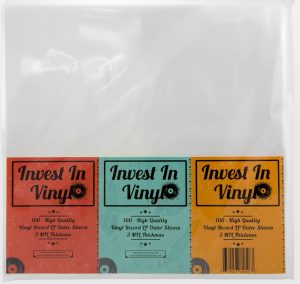
If you are ready to upgrade jackets across a large portion of your collection without spending a premium, these outer sleeves are a practical choice that balances protection and cost. They are designed for collectors who want reliable, everyday jacket coverage on a broader scale.
The material feels sturdy enough to reduce common wear patterns like shelf rub and edge scuffing that develop over time. While not as flexible as some premium sleeves, the balance of thickness and pliability is solid for most standard LP jackets. For daily handling and routine shelved storage, they protect jacket surfaces by absorbing contact pressure before the jacket itself takes on wear.
These sleeves are specifically suited for batch upgrades. When sleeve replacement is part of maintenance rather than occasional care, the price point makes it feasible to sleeve many records at once. You can outfit a whole shelf without second-guessing whether sleeve costs will outweigh the benefits.
Fit is straightforward and reliable. The sleeves accommodate most standard jackets without being too loose or too snug, which prevents unnecessary bending at corners. They also slide in and out of shelves with minimal resistance even in somewhat tight rows. That ease of handling matters for daily use, because sleeves that resist insertion tend to cause more jacket stress than they prevent.
Clarity is acceptable for everyday enjoyment. They are not ultra-crystal clear or museum-grade in appearance, but they still allow cover art to show through without significant visual distortion. That means you can keep your walls of jackets visually intact while still providing a protective layer.
These outer sleeves make sense if your main goal is broad coverage of a large collection and you care more about practical protection than premium feel. For everyday jacket care, they offer a sensible compromise between cost and performance.
Best Budget Upgrade from No Sleeves
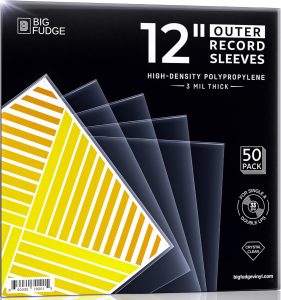
For collectors who have never used outer sleeves or who are upgrading from nothing, Big Fudge’s outer sleeves offer an easy and affordable start. These are not premium museum-grade covers, but they are a meaningful improvement over bare jackets and help slow the everyday wear that comes from normal shelving and handling.
The material feels thinner than some of the more protective options, which makes these sleeves very easy to use. Records slide in and out with little resistance, which is especially helpful if you have tight shelves or are new to using protective sleeves. This smooth handling matters even more than thickness when you are working through a large vinyl collection, because frustration during insertion can undo the very protection you are trying to create.
Because the sleeves are lighter and less rigid, they do not create pressure on corners or edges as they flex during handling. This lowers the risk of creating new stress points while protecting the jacket surface from direct contact with neighboring records.
Static and dust are less of a concern with jackets than with records themselves, but every bit of reduced friction helps keep jackets looking cleaner. These sleeves help by acting as a barrier against dust accumulation on jacket surfaces, which can otherwise embed in textured finishes over time and become difficult to remove.
Clarity is good for casual display, even if it is not the most transparent on the market. You can still see album art well enough on a shelf, and the sleeves do not introduce significant visual distortion.
These sleeves are best for collectors who want to start protecting jackets without investing heavily. They are ideal for newer collectors, casual listeners, or anyone who has resisted sleeves out of cost concerns. If you move later toward more protective options, these still serve as a useful everyday layer that reduces common wear.
Best Premium Feel and Clarity

Boundless Audio’s outer sleeves are designed for collectors who value both protection and presentation. The material feels smoother and more substantial compared with many basic or mid-range sleeves, and that combination helps reduce the everyday friction that leads to edge wear and surface scuffs on jackets.
In use, these sleeves provide a confident protective layer without feeling bulky. While some heavy sleeves can fight against tight shelving or add unnecessary stiffness, Boundless Audio’s design moves more fluidly with the jacket. That makes it easier to pull records from packed shelves while still maintaining a protective barrier against surface contact. Records slide out more smoothly, and the jacket edges are less likely to experience the gradual wear that comes from repeated bumps against neighbors.
Clarity is noticeably strong with these sleeves. If you care about visibility of album art and want minimal visual distortion, the clarity here stands out compared with many basic alternatives. That can make a difference when you browse shelves by sight and enjoy jackets as part of the overall collection experience.
Another benefit of these sleeves is consistency of fit across a range of jacket sizes. Whether you are covering standard LP jackets or thicker gatefolds, they hold shape without bunching or collapsing. That reliability matters over time, since poorly fitted sleeves can warp or shift and lead to the very wear you are trying to avoid.
These sleeves are best for collectors who see jackets as part of the record experience and want both protection and a refined touch. They are not a budget pick, and they do not make an unreadable or invisible layer around your jackets. What they do offer is a protective sleeve that feels right in hand and performs reliably for day-to-day storage and handling.
Final Thoughts
Outer sleeves protect jackets in a slow, cumulative way. They do not stop all wear, and they do not turn heavily handled records into pristine copies. What they do is remove the small, repeatable stresses that quietly age jackets over time. Shelf rub, edge softening, and surface scuffs tend to happen gradually, and outer sleeves interrupt that process before it becomes visible.
The right sleeve choice depends on how your collection is stored and handled. Tight shelving favors flexibility and smooth movement. Larger collections benefit from cost-effective sleeves that make full coverage realistic. Box sets and gatefolds need extra room to avoid pressure and bending. There is no single best option for every setup, but there is usually a clear mismatch when a sleeve feels awkward, stiff, or frustrating to use.
What matters most is consistency. Jackets left unprotected age unevenly, especially when mixed with sleeved records on the same shelf. Once sleeves are in place, handling becomes more predictable and storage feels less stressful. Jackets stay cleaner, edges hold their shape longer, and browsing your collection becomes easier on both the records and the covers.
Outer sleeves work best when they support good storage habits rather than replacing them. When sleeves fit well, move easily on the shelf, and stay stable over time, they quietly do their job. That steady protection is what keeps jackets looking intact years down the line, without requiring constant attention or adjustment.