

Static was one of the first vinyl problems I tried to solve with surface tools. Brushes, sleeves, mats, and wipes all helped a little, but none of them stopped static from coming back. What finally became clear is that static was not a record problem. It was an environment problem that kept showing up on the record surface.
The pattern was predictable. During dry months, records clung to inner sleeves, dust settled faster, and playback required more brushing than usual. In more humid periods, static was less aggressive, but dust and handling residue increased. The records themselves were not changing. The room was.
Once I started monitoring humidity consistently, a lot of the frustration made sense. Static spikes lined up with humidity drops. Dust buildup followed unstable conditions rather than specific records. Trying to fight static at the surface level without addressing humidity felt like wiping water off the floor while the sink was still overflowing.
This guide is written for collectors who want to reduce static and dust at the source instead of reacting to it constantly. Anti-static accessories that work at the environmental level are slower and less flashy than surface tools, but they are far safer. By stabilizing humidity and airflow, these tools reduce how often static forms in the first place, which makes every other part of vinyl care easier and more predictable.
Quick Recommendations
If static and dust keep coming back despite good sleeves and careful handling, these tools help stabilize the environment that causes those problems. Each option below targets a different part of humidity and air control, which is where static charge usually originates.
Best Entry-Level Humidity Monitoring Tool | TempPro TP50 2 Pieces Digital Hygrometer
A simple way to see when humidity drops into static-prone territory. Monitoring alone often explains recurring static issues.
Best Passive Moisture Buffer for Storage | wisedry 100g Rechargeable Desiccant Packs
Helps smooth out small humidity swings inside cabinets, shelves, or storage bins without power or noise.
Best Small-Space Dehumidifier | KNKA Dehumidifiers
Designed for closets, listening corners, or enclosed shelving areas where humidity builds unevenly.
Best Room-Scale Dehumidifier | AEOCKY Large Dehumidifier
Useful when an entire room experiences humidity swings that contribute to static and dust cycles.
Best Control Brain for Active Humidity Management | Inkbird Humidity Controller
Allows dehumidifiers or humidifiers to run only when needed, keeping conditions stable without constant manual adjustment.
Buyer Education: Reducing Static by Stabilizing the Environment
Static electricity on vinyl records is rarely caused by the record itself. It forms when environmental conditions allow electrical charge to build and linger, most often when humidity drops too low or fluctuates frequently. Understanding why this happens makes it easier to choose tools that reduce static at the source rather than constantly reacting to it.
Why Static Forms on Vinyl Records
Vinyl is an insulator, which means it does not easily dissipate electrical charge. In dry air, there is not enough ambient moisture to help neutralize that charge, so static builds up during handling, playback, and even simple movement in the room. Once charged, records attract dust, cling to sleeves, and resist clean handling.
This is why surface tools often feel like temporary fixes. Brushes and anti-static accessories can remove or neutralize charge momentarily, but if the environment stays dry or unstable, static returns quickly. How to Prevent Static Electricity on Vinyl Records explains how humidity plays a central role in this cycle.
Monitoring Changes Behavior
One of the most overlooked anti-static tools is a simple hygrometer. When you can see humidity levels clearly, patterns emerge. Static issues often spike below a certain threshold and ease when humidity stabilizes. Monitoring does not fix humidity on its own, but it changes how you respond. Instead of guessing, you can adjust ventilation, move storage, or activate humidity control only when it is actually needed.
Passive vs Active Humidity Control
Passive tools, such as desiccant packs, help buffer small humidity swings inside cabinets, shelves, and storage containers. They do not control a room, but they smooth out short-term fluctuations that contribute to static and dust attraction near records.
Active tools, like dehumidifiers and humidity controllers, work at the room level. These are more effective when humidity changes are larger or more frequent. The goal is not constant correction but stability. Tools that cycle on and off based on real conditions help avoid over-drying the air, which can make static worse.
Why Sleeves Alone Are Not Enough
Outer and inner sleeves help reduce friction and protect surfaces, but they do not address the electrical charge forming in the room. Even well-sleeved records can develop static if humidity remains unstable. This is why collectors sometimes find that upgrading sleeves does not fully solve static problems. Do Outer Sleeves Actually Protect Record Jackets? provides context for what sleeves protect against and what they cannot address.
Stabilizing the System
The most effective anti-static strategy combines monitoring, buffering, and controlled intervention. When humidity stays within a moderate range, static becomes less aggressive, dust settles more slowly, and handling requires less constant cleaning. Environmental tools work quietly in the background, reducing how often static appears instead of chasing it every time it does.
Product Reviews: Humidity Control Products
Best Entry-Level Humidity Monitoring Tool
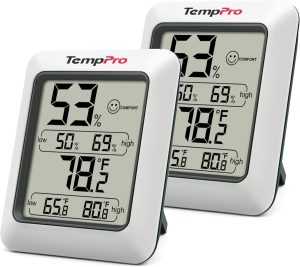
The TempPro TP50 hygrometers are simple tools, but they solve one of the biggest problems in static control: not knowing when conditions have drifted into a trouble zone. Static often feels random until you can see humidity levels in real time. Once you do, patterns become obvious and much easier to manage.
These units measure both temperature and relative humidity, which is useful because static risk is influenced by the combination of the two. In practical use, having two sensors lets you compare conditions between storage areas and listening spaces. Many collectors are surprised to find that a shelf, cabinet, or corner of a room behaves very differently from the room average. Those microclimates are often where static and dust issues originate.
The real value of a hygrometer like this is behavioral. When humidity drops below a comfortable range, static problems are more likely. When humidity rises too much, dust and residue become more noticeable. Seeing those changes helps you respond deliberately instead of reactively. You can decide when to run a dehumidifier, when to add passive buffering, or when to simply leave things alone.
These hygrometers do not control humidity on their own. They also do not need to be perfectly precise to be useful. Consistency matters more than absolute accuracy. Watching trends over time gives you a clearer picture of how seasons, weather, and HVAC cycles affect your vinyl environment.
The TempPro TP50 is best for collectors who want a low-cost way to understand their environment before investing in more complex solutions. As a first step in reducing static and dust buildup, monitoring is often the most effective upgrade you can make.
Best Passive Moisture Buffer for Storage
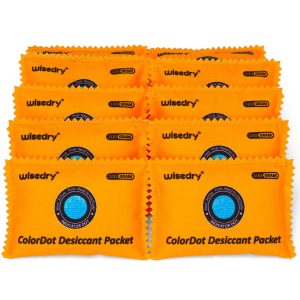
Passive moisture control plays an important role in reducing static and dust in areas where active humidity control is impractical. The wisedry 100g rechargeable desiccant packs are designed to absorb excess moisture in enclosed or semi-enclosed spaces, helping smooth out short-term humidity swings that contribute to static buildup around records.
These packs work best inside cabinets, shelving units, record crates, and storage bins where airflow is limited. In those micro-environments, humidity can fluctuate more dramatically than in the room as a whole. Even small swings can increase static charge or encourage dust to cling to surfaces. By buffering moisture in these spaces, desiccant packs help create a more stable local environment around stored records.
One of the key advantages of rechargeable desiccant packs is predictability. Unlike disposable packs, these can be dried and reused, which encourages regular maintenance rather than neglect. When the packs reach saturation, they can be recharged and returned to service, maintaining consistent performance over time.
It is important to understand what these packs do not do. They do not control room humidity, and they cannot correct large environmental problems on their own. If a room is consistently too dry or too humid, desiccant packs will be overwhelmed. Their strength is in moderating small fluctuations and protecting records in confined spaces where humidity changes are most noticeable.
The wisedry packs are best for collectors who store records in cabinets, shelves, or storage boxes and want a low-effort way to reduce static and dust attraction locally. Used alongside monitoring and broader humidity control strategies, they help keep storage conditions more stable and reduce how often static problems surface during handling.
Best Small-Space Dehumidifier
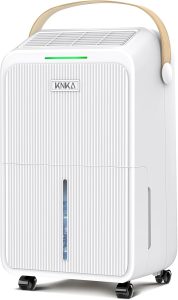
Small-space dehumidifiers are most useful in areas where humidity behaves differently than the rest of the home. Closets, listening corners, shelving units, and enclosed rooms can trap moisture or experience sharper swings, which increases both static problems and dust buildup. The KNKA dehumidifiers are designed to address these localized issues without the size, noise, or power draw of full room units.
In practical use, these units work best when humidity issues are modest but persistent. They help pull excess moisture out of the air in confined spaces, which stabilizes conditions and reduces the environmental triggers that make static unpredictable. When humidity swings are smaller and slower, static charge is less aggressive and dust settles more gradually, making routine handling easier.
Because these dehumidifiers are compact, they can be placed closer to record storage areas rather than across the room. That proximity matters. Environmental conditions around shelves and cabinets often differ from what a central thermostat reports. A small unit working continuously in those areas can smooth out microclimates that otherwise cause records to behave inconsistently during handling.
It is important to set expectations correctly. Small dehumidifiers do not have the capacity to control humidity in large rooms or whole floors. They are not replacements for HVAC-based solutions or larger dehumidifiers. Their role is targeted stabilization, not full environmental control.
KNKA dehumidifiers are best for collectors who have localized humidity issues or who store records in smaller rooms, closets, or shelving areas where conditions drift more than expected. Used alongside monitoring and passive buffering, they help create a more predictable environment that reduces static and dust without overcorrecting or drying the air excessively.
Best Room-Scale Dehumidifier
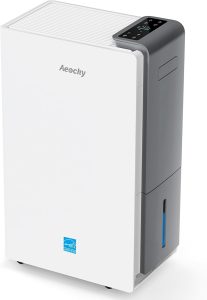
Room-scale dehumidifiers are most useful when static and dust problems are symptoms of broader environmental instability rather than isolated storage issues. If an entire listening room or storage area experiences wide humidity swings, small passive tools often are not enough. The AEOCKY large dehumidifier is designed to stabilize conditions at the room level, which reduces static formation before it reaches records, sleeves, and playback surfaces.
In everyday use, the value of a larger unit comes from consistency. Instead of reacting to spikes with temporary fixes, a room-scale dehumidifier helps keep humidity within a narrower band over longer periods. When humidity stops swinging dramatically, static becomes less aggressive, dust settles more slowly, and handling requires fewer interventions. This creates a calmer maintenance rhythm where records behave predictably.
Placement matters with units like this. Positioning the dehumidifier in the same room where records are stored and played allows it to address the air that actually interacts with vinyl. Running it intermittently, based on monitoring rather than constantly, helps avoid over-drying the air, which can make static worse. The goal is stability, not the lowest possible humidity.
It is also important to recognize what a large dehumidifier does not do. It does not eliminate the need for monitoring, passive buffering, or good storage practices. Records still benefit from sleeves, dust control, and careful handling. The dehumidifier simply reduces the environmental pressure that makes those tasks harder.
The AEOCKY large dehumidifier is best for collectors who have a dedicated listening room, basement space, or larger storage area where humidity shifts are pronounced. Used thoughtfully and in combination with monitoring and control tools, it provides a foundation that makes static and dust issues easier to manage over the long term.
Best Control Brain for Active Humidity Management
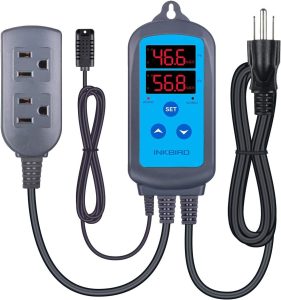
The Inkbird humidity controller fills a role that many collectors overlook at first. It does not add or remove moisture on its own. Instead, it acts as the decision-making layer that keeps humidity control tools from overcorrecting. When static and dust are caused by humidity swinging too far in either direction, control matters as much as capacity.
This controller works by turning connected humidifiers or dehumidifiers on and off based on real-time humidity readings. Rather than running a unit constantly or relying on guesswork, the controller maintains a defined range. That stability is what reduces static formation most effectively. Sudden drops in humidity are often worse than consistently dry air, and uncontrolled equipment can create exactly those swings.
In a vinyl storage context, this kind of controller is especially useful in rooms where humidity changes with weather, seasons, or HVAC cycles. Basements, spare rooms, and listening spaces with limited airflow benefit the most. By preventing overshooting and undershooting, the Inkbird helps keep conditions predictable, which directly reduces static charge buildup and dust attraction.
Another advantage is behavioral. Once a controller is set, it removes the temptation to constantly tweak settings. That hands-off consistency makes it easier to maintain stable conditions over long periods instead of reacting to every static episode. When humidity is kept within a moderate band, surface tools are needed less often and handling becomes calmer.
The Inkbird humidity controller is best for collectors who already use active humidity tools and want better control rather than more power. It is not a first step, but it is often the missing piece that turns scattered tools into a cohesive environmental system that supports long-term vinyl preservation.
Final Thoughts
Static and dust problems rarely come from a single cause. They are usually signs that the environment around your records is fluctuating more than it should. Anti-static accessories that work at the environmental level focus on preventing charge from forming rather than removing it after the fact. That approach is slower, but it is far safer and more effective over time.
Monitoring gives you awareness. Passive buffering smooths out small swings. Active dehumidifiers address larger shifts. Controllers keep those tools from working against each other. When these elements are combined thoughtfully, static becomes less aggressive, dust settles more slowly, and record handling feels easier and more predictable.
No accessory replaces good storage choices or careful handling. What these tools do is reduce the background friction that makes vinyl care feel like a constant battle. By stabilizing humidity and airflow, you create conditions where records, sleeves, and playback equipment all behave more consistently.
Reducing static is not about perfection. It is about creating an environment where problems appear less often and are easier to manage when they do. That kind of stability is what supports vinyl collections aging well over the long term.